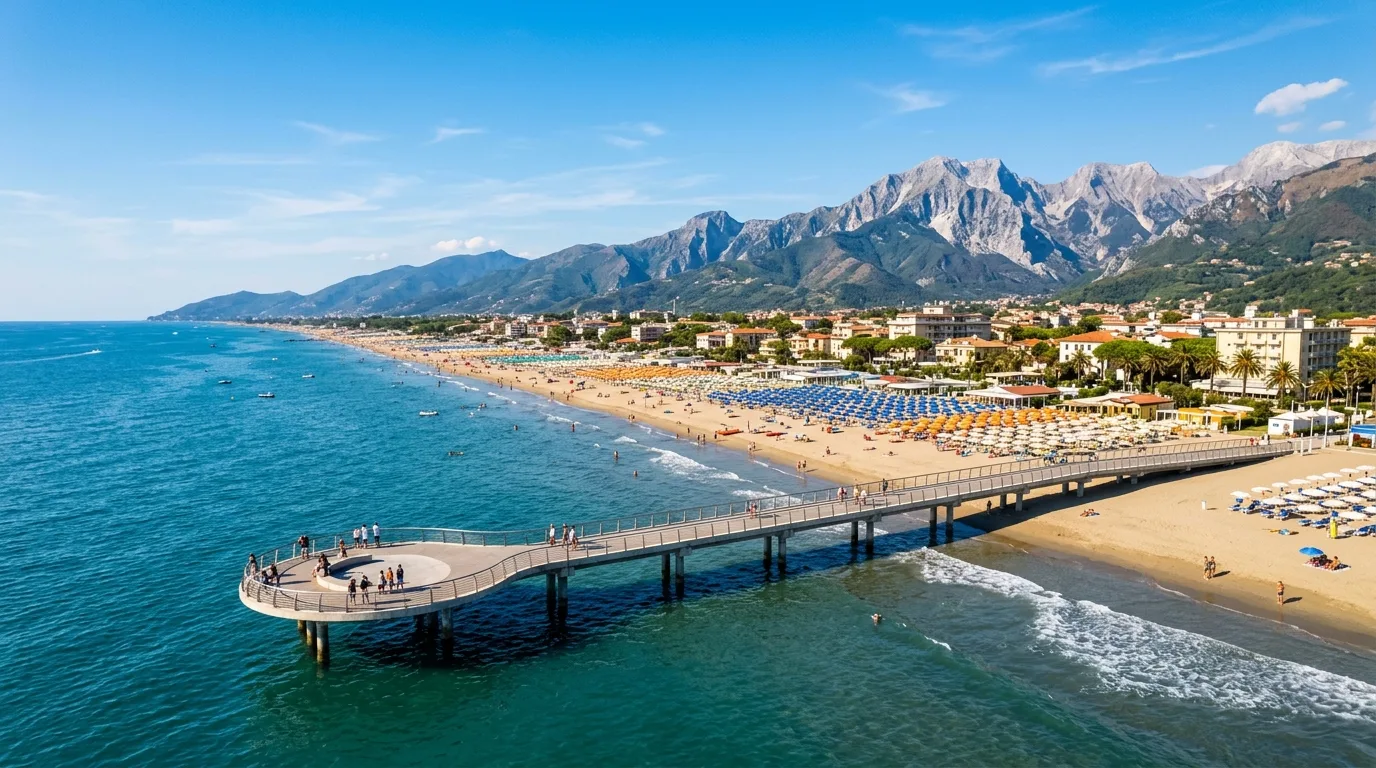
Camaiore, once known as *Campus Maior* (Greater Field), is a vibrant town of 31,724 inhabitants nestled in Versilia, southwest of the Apuan Alps. Founded in the Lombard era, its name reflects its origins as an expansive agricultural area, attested by early historical documents mentioning the Badia di Camaiore (9th century). Perched on rolling hills, this municipality stands out for its rich historical-religious heritage, Lucchese-Romanesque architecture, and a culinary tradition deeply rooted in Tuscan cuisine.
What to See in Camaiore
Badia di Camaiore (9th–12th century): The historic heart of Camaiore is the Badia di San Pietro, first mentioned in Lombard documents. In the 12th century, thanks to the patronage of Countess Matilda of Canossa and monastic initiatives, the original single-nave church was transformed: two side aisles, an apse, and a wooden ceiling structure were added, giving it its current appearance. Today, beyond its historical value, the abbey houses a memorial plaque to the fallen of World War I, featuring photographs of the brothers of the SS. Pietà. Pieve di Santo Stefano (9th century): Located on a hillside along the Via Francigena, this Romanesque-Lucchese church symbolizes the ecclesiastical jurisdiction that once covered the Camaiore valley to Pieve a Elici. Its 17th-century restored façade features a prospective staircase framing the square. Inside, a standout feature is an ancient Roman sarcophagus from the 2nd century, the tomb of Lucius Imbricius, recovered from the village of Lombrici. Marginettes and Sacred Landscape: Throughout Camaiore’s territory, you’ll find numerous Marginettes, small votive chapels with thatched or edicule roofs, scattered along trails and villages. These folk structures reflect the widespread religious devotion in the area and are often linked to events like the Processione del Corpus Domini. Teatro dell’Olivo (19th century): A symbol of Camaiore’s cultural life, this historic theater hosted theatrical and musical performances since its inauguration. Though no longer active, it remains an identitary heritage of the town.Authentic Flavors and Gastronomic Tradition
While Camaiore doesn’t have restaurants listed in the database, it sits within the rich gastronomic context of Versilia and the province of Lucca. Among the regional specialties, stand out:- Bistecca alla Fiorentina: The iconic Tuscan dish, prepared with Chianina or Podolica beef, grilled and served with olive oil and rosemary.
- Ribollita: A rustic soup made with stale bread, greens (kale, beans), and olive oil, emblematic of peasant cuisine.
- Pappa al Pomodoro: A hearty first course of bread, tomatoes, garlic, and olive oil, typical of Versilia’s cuisine.
- Cantucci di Prato with Vin Santo: Classic dry biscuits paired with sweet Tuscan wine, perfect for breakfast or a well-deserved rest.
Practical Tips and How to Get There
How to Get There: - Nearest Airport: Pisa Galileo Galilei (PSA) (29 km, ~33 minutes via SS16). - Nearest Train Station: None in Camaiore. The closest are Lucca (20 km) and Pisa Centrale (35 km). Nearby Villages for Excursions: Camaiore is an ideal base for exploring the surrounding villages:- Pietrasanta (6.7 km): Famous for its sculptural school and Versilia’s beaches.
- Seravezza (8.7 km): Known for the Castello di Seravezza and its maritime atmosphere.
- Massarosa (8.4 km): Gateway to Versilia, featuring the Parco della Madonnina and Viale Mare.
- 134 hotels (including 1 compliant with the Codice Identificativo Nazionale (CIN)), ideal for cultural and tourist stays.
- 7 Bed & Breakfast options, for a more intimate and family-like experience.
Frequently Asked Questions About Camaiore
Is Camaiore a good starting point for exploring Versilia?
Absolutely! Thanks to its central location, Camaiore is perfect for discovering both the hillside villages (like Seravezza or Pietrasanta) and the beaches of Versilia (just 10 km from Viareggio).
What are Camaiore’s oldest traditions?
The Processione del Corpus Domini, dating back to 1844, is the most emblematic tradition. Originally featuring flower carpets, today it takes place on sawdust carpets, a custom linked to the visit of Duke Carlo Ludovico di Borbone.
Are there museums or cultural attractions beyond churches?
Beyond its historic churches, Camaiore boasts the Teatro dell’Olivo, a symbol of local cultural life, and the Marginettes, votive chapels scattered throughout the territory that reflect popular devotion.